Case study · Public preview · 2026
Trivia & Tunes: a living AI game engine
A pub-quiz night that listens to spoken answers, grades them fairly, hosts the room with a voice of its own — and quietly remembers the best moments so the next game feels like it knows you. This is how trivia, tunes and artificial intelligence meet.
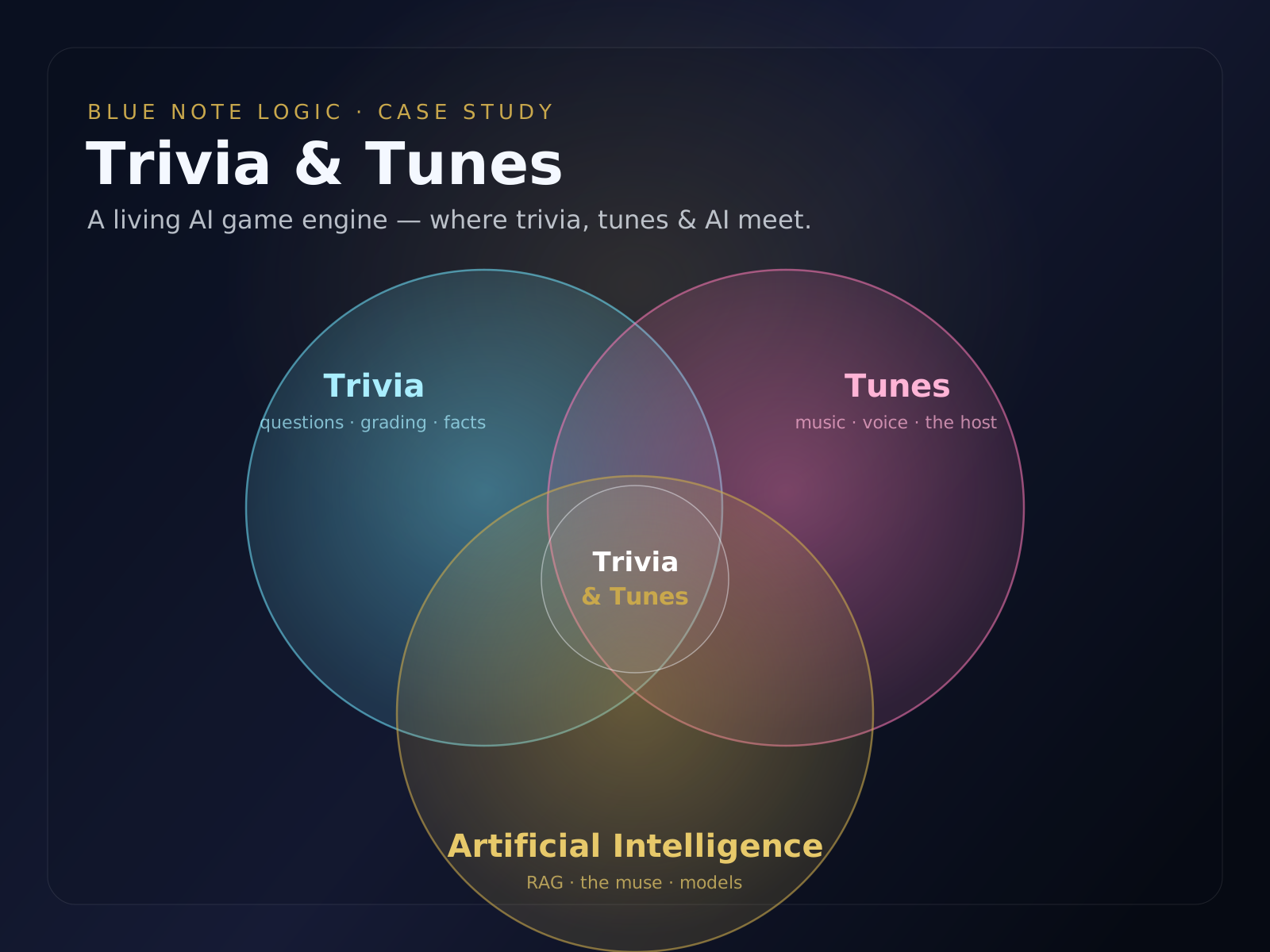
Most quiz apps show you a question and check a multiple-choice box. Trivia & Tunes runs the whole night the way a great human host would — and it gets better every time it's played.
Under the hood it's a coordinated cast of AI models doing distinct jobs: Whisper turns spoken answers into text, Azure GPT-4o-mini grades them against the intended answer, Claude on Bedrock drafts games and writes the host's banter, and ElevenLabs and Piper give the host — Finn — a real voice. Holding it together is CaveauAI: a private retrieval layer that enriches commentary, keeps grading consistent, and stores the muse — the host's memory of the room.
The muse. Behind the host's wit sits a curated corpus of expertly-calibrated quiz clues — the muse — plus a growing memory of each night's funniest near-misses and clutch comebacks. It's why Finn can land a callback to something that happened three questions ago, or last Friday.
Two ways to read this
This study is written for two audiences. Read whichever fits — or both.
The Experience
What a Trivia & Tunes night actually feels like — the host that listens, reacts and remembers — and why that's hard to fake. No jargon.
Study 2 · TechnicalThe Engine
The full stack: Whisper → grading → RAG enrichment → the muse → cost telemetry, and the flywheel that turns play into a sovereign, fine-tuned model. Models named.
The shape of it, in numbers
Where this is going
Everything above is live today. The next turn of the flywheel is honest about being next: as graded play accumulates, Trivia & Tunes will use it for predictive difficulty (calibrating question sets to the room) and, ultimately, a sovereign fine-tuned host model trained on its own play. The tool becomes your AI.